 Naa Songs
If you’ve been training at home for a while, you know the frustration. The weights that once challenged you now feel routine, your muscles have adapted, and progress has stalled. This plateau is the silent killer of motivation for advanced trainers who’ve outgrown basic programming. The solution might not be adding more weight or more reps—it could be changing how you handle the weight you already have. Eccentric training, the deliberate emphasis on the lowering or lengthening phase of a movement, has long been recognized in sports science as a powerful driver of muscle growth and strength adaptation. But here’s the question that matters for those of us working out in spare bedrooms and garages: does compact home exercise equipment actually enhance eccentric training effectiveness, or does it limit what’s possible? This article dives into that question by examining the negative movement phase, exploring Chain Mode as a progressive resistance strategy, and delivering practical solutions that advanced home trainers can implement immediately to shatter their plateaus.
Understanding Eccentric Training: The Foundation for Advanced Weight Training
Eccentric training focuses on the negative movement phase of an exercise—the portion where your muscle lengthens under load. When you lower a dumbbell during a bicep curl, resist gravity during the descent of a squat, or control a push-up on the way down, you’re performing eccentric contractions. For advanced trainers, this phase represents untapped potential because muscles can handle approximately 20-40% more force eccentrically than concentrically. This means your muscles are actually understimulated during the lowering phase of most conventional training.
The physiological response to emphasized eccentric work is distinct from what concentric training produces. Eccentric contractions create greater mechanical tension and more extensive microtrauma to muscle fibers, particularly targeting type II fast-twitch fibers that have the highest growth potential. This damage triggers a robust hypertrophic response—your body doesn’t just repair the tissue, it reinforces it. For someone who has already adapted to standard rep schemes and loading patterns, this represents a fundamentally different stimulus that the neuromuscular system hasn’t fully accommodated.
Where concentric training primarily builds contractile strength, eccentric training develops tendon resilience, improves force absorption capacity, and creates architectural changes in muscle fascicle length. These adaptations explain why advanced lifters who incorporate deliberate eccentric phases often break through strength plateaus that additional volume alone couldn’t solve.
The Science Behind Eccentric Overload
During the negative movement phase, your nervous system recruits fewer motor units to control the same load compared to lifting it. This means each active fiber bears greater relative tension, creating a potent stimulus for adaptation. Time under tension increases dramatically when you extend the eccentric phase to three, four, or even six seconds per rep, and this prolonged mechanical loading amplifies metabolic stress and cellular signaling pathways responsible for muscle protein synthesis. For advanced trainers pursuing both strength and muscular endurance, eccentric emphasis delivers a dual benefit: it builds maximal force capacity through high-threshold motor unit recruitment while simultaneously challenging the muscle’s ability to sustain effort across extended time domains. This combination makes eccentric training uniquely suited to athletes who need their strength gains to translate into functional performance rather than just bigger numbers on a single rep.
The Role of Compact Home Exercise Equipment in Eccentric Training
Compact home exercise equipment has evolved far beyond the basic barbell-and-bench setup that once defined garage gyms. Today’s space-efficient tools are specifically engineered to deliver training stimuli that rival commercial facilities, and eccentric training is where many of these designs truly shine. The constraint of limited square footage actually forces a design philosophy that benefits the negative movement phase—equipment must be versatile, adjustable, and capable of providing resistance across multiple planes without requiring a dozen separate machines.
Adjustable dumbbells allow quick load changes between the concentric and eccentric portions of a set, enabling techniques like eccentric overload where a training partner or your own momentum helps you lift a heavier weight that you then lower under strict control. Resistance bands add ascending tension that naturally increases load as you move through a range of motion, and when reversed, they can assist the concentric phase while leaving the eccentric fully loaded. Cable-based compact systems and flywheel trainers represent perhaps the most significant advancement for home eccentric training—these devices store kinetic energy during the concentric pull and return it during the eccentric phase, demanding maximal braking force from your muscles throughout the negative movement phase. The challenge with compact home exercise equipment has traditionally been load ceiling: eventually, advanced trainers outgrow what smaller devices can offer concentrically. But because muscles handle significantly more force eccentrically, equipment that feels maxed out for lifting still provides meaningful stimulus during controlled lowering. This reframes the limitation as an advantage—your compact setup may already have untapped eccentric potential you haven’t exploited.
Selecting the Right Equipment for Negative Phases
When choosing equipment to support eccentric training at home, prioritize smooth resistance profiles over raw load capacity. Jerky or friction-heavy mechanisms make controlled three-to-six-second negatives dangerous and inconsistent. Look for systems that allow micro-adjustments in resistance—small increments matter more during eccentric work because the margin between productive overload and injury is narrower when muscles are lengthening under tension. Safety features deserve equal weight in your decision: equipment that lets you bail safely from a failed eccentric rep without dropping weight or compromising joint position is non-negotiable for solo training. Finally, consider versatility across movement patterns. The best compact equipment for eccentric emphasis supports both upper and lower body exercises through multiple angles, giving you enough exercise variety to program eccentric blocks without needing separate tools for each muscle group.
Exploring Chain Mode for Progressive Resistance in Eccentric Training
Chain Mode represents a progressive resistance strategy that varies the load throughout a repetition’s range of motion, and for advanced home trainers focused on eccentric development, it fundamentally changes how force is applied during the negative movement phase. In traditional weight training, the load remains constant whether you’re at the top or bottom of a movement. Chain Mode—whether achieved through literal chains draped over a barbell, banded setups that alter tension curves, or digital resistance systems that programmatically adjust load in real time—adds or removes resistance at specific points in the lift. During the eccentric phase, this means the load can progressively increase as you descend into the most mechanically disadvantaged position, forcing your muscles to produce greater braking force exactly where they’re most vulnerable to failure.
For advanced trainers, the benefits extend beyond simple overload. Chain Mode creates an environment where the nervous system must continuously recalibrate motor unit recruitment throughout the negative movement phase rather than settling into a predictable pattern. This unpredictability drives neuromuscular adaptation that static loads cannot replicate after years of training. The injury prevention angle is equally compelling: because Chain Mode can be configured to reduce load at the stretched position where connective tissue is most at risk, it allows aggressive eccentric overload through the mid-range while protecting joints and tendons at end ranges. This intelligent loading pattern means you can train the negative phase harder and more frequently without accumulating the joint stress that typically limits eccentric training volume in experienced lifters.
How Chain Mode Mimics Real-World Strength Curves
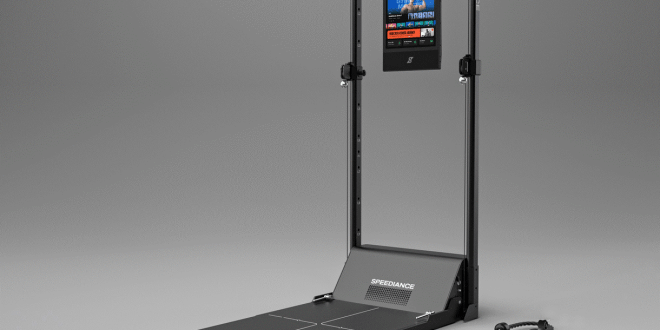
Your muscles don’t produce force uniformly across a joint’s range of motion—they follow a strength curve that peaks where leverage is optimal and drops where mechanical advantage diminishes. Chain Mode aligns external resistance with this biological reality. During a squat’s eccentric phase, for example, chains pooling on the floor progressively deload the barbell as you descend into deeper knee and hip flexion, matching the reduction in your quadriceps’ force-producing capacity at longer muscle lengths. When integrated with compact home equipment—particularly cable systems or smart resistance devices like the Speediance system that offer programmable load curves—Chain Mode becomes accessible without needing physical chains or extensive floor space. A flywheel device with variable braking, or a compact cable machine with digital resistance profiles, can replicate the ascending-descending tension patterns that chains provide in a commercial gym. The biomechanical advantage is clear: you’re training your muscles through their full eccentric range with resistance that respects your body’s architecture, producing more complete fiber recruitment and reducing the compensatory movement patterns that develop when a fixed load exceeds your capacity at specific joint angles. For the advanced home trainer, this means extracting maximum eccentric stimulus from equipment that might otherwise feel insufficient for continued progression.
Practical Solutions: Incorporating Eccentric Training and Chain Mode with Compact Equipment
Step 1: Assessing Current Workouts and Equipment
Before programming eccentric blocks, audit your current training honestly. Identify which exercises you’ve been performing with minimal eccentric control—most trainers discover they’ve been dropping weights quickly on at least half their movements. Time your negatives on key lifts: if you’re consistently under two seconds on the lowering phase, you have immediate room for improvement without changing anything else. Next, evaluate your compact home exercise equipment for eccentric suitability. Test each piece by performing a slow five-second negative with moderate load. Does the resistance remain smooth throughout? Can you stop at any point in the range without the mechanism catching or jerking? Equipment that passes this test is ready for eccentric emphasis. Equipment that doesn’t may still work for concentric training but should be avoided for dedicated negative phase work where control is paramount.
Step 2: Designing Eccentric-Focused Exercises with Chain Mode
Apply Chain Mode principles to three foundational movement patterns using your compact setup. For squats, attach a resistance band from the top of a rack or door anchor to your barbell or weight vest—this creates progressive deloading as you descend, mimicking chain behavior while allowing aggressive eccentric braking through the mid-range. Use a four-second descent with a deliberate pause at the bottom. For pressing movements, configure your cable system or smart resistance device to deliver peak load at the top quarter of the eccentric phase where your pectorals and triceps are strongest, tapering as you approach the stretched position. Perform sets of five reps with six-second negatives at approximately 80% of your concentric max. For rows and pull-downs, reverse the curve—program or arrange resistance so load builds as your back muscles lengthen, training the scapular retractors through their weakest range. Three working sets per exercise, twice weekly, provides sufficient eccentric volume without overwhelming recovery capacity.
Step 3: Progressive Overload and Monitoring Results
Track eccentric performance separately from your concentric metrics. Record the load used, negative duration per rep, and total time under tension for each eccentric-focused set. Progress by extending negative duration before adding resistance—moving from four-second to six-second eccentrics at the same weight represents meaningful overload even though the number on the plate hasn’t changed. Every three weeks, test your concentric strength on key lifts to verify that eccentric work is transferring. Most advanced trainers see concentric improvements within two eccentric-focused training cycles. Monitor joint health carefully: mild delayed-onset muscle soreness lasting 48-72 hours indicates productive stimulus, while sharp pain during negatives or soreness persisting beyond four days signals excessive volume. Reduce eccentric sets by one-third if recovery markers suggest overreach, then rebuild gradually. This systematic approach ensures your compact home exercise equipment delivers continuous eccentric progression without the injury risk that derails long-term gains.
Unlocking Plateau-Breaking Eccentric Potential with Your Compact Home Gym
Eccentric training isn’t just compatible with compact home exercise equipment—it’s arguably where these setups deliver their greatest value. The negative movement phase demands control, time under tension, and intelligent resistance progression rather than raw load, which means your space-efficient gear already possesses the qualities that matter most for this training style. Chain Mode amplifies this advantage further by aligning resistance with your body’s natural strength curves, allowing you to overload the eccentric phase aggressively while protecting vulnerable joint positions. For advanced trainers who’ve exhausted conventional programming, this combination represents a genuine path through plateaus that more volume and heavier weights alone cannot breach. The practical framework is straightforward: audit your current eccentric tempo, verify your equipment handles smooth controlled negatives, apply progressive resistance principles through Chain Mode setups, and track time under tension as your primary progression metric. Start with your next training session—slow down your negatives to four seconds, apply a banded or programmed resistance curve to one compound lift, and observe how a familiar weight suddenly becomes a completely different stimulus. Your compact home gym isn’t holding you back; you simply haven’t demanded enough from it during the phase that matters most.